Table of Contents
Java Inheritance :
Inheritance is acquiring the properties of parent class in child class. Re-usability is the important aspect of programming.
By extending a class you can use the properties and also add new methods in child class.
There are 3 types of java inheritance
- Single Inheritance
- Multi-level Inheritance
- Hierarchical Inheritance
Single Inheritance:
In single inheritance there is a parent/base class and child/derived class.
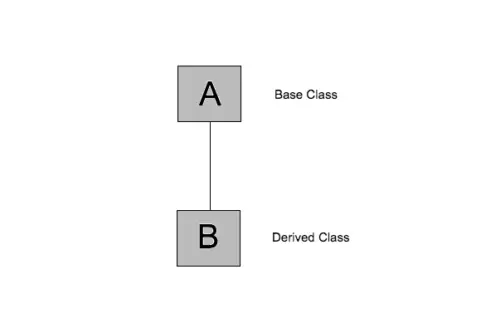
Create a parent class with a add method accepting two variables.
class Parent {

    void add(int x, int y) {

        System.out.println("Result of addition is " + (x + y));
    }

}
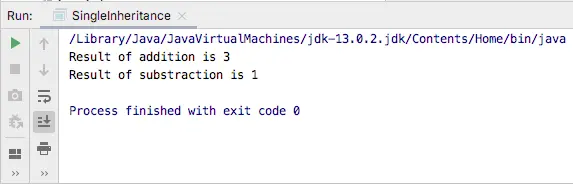
And acquire the add method and can also add additional methods into derived class as
class SingleInheritance extends Parent {

    public static void main(String args[]) {

        SingleInheritance singleInheritance = new SingleInheritance();
        singleInheritance.add(1, 2);
        singleInheritance.sub(2, 1);

    }

    void sub(int x, int y) {

        System.out.println("Result of substraction is " + (x - y));
    }
}
Multi Level Inheritance:
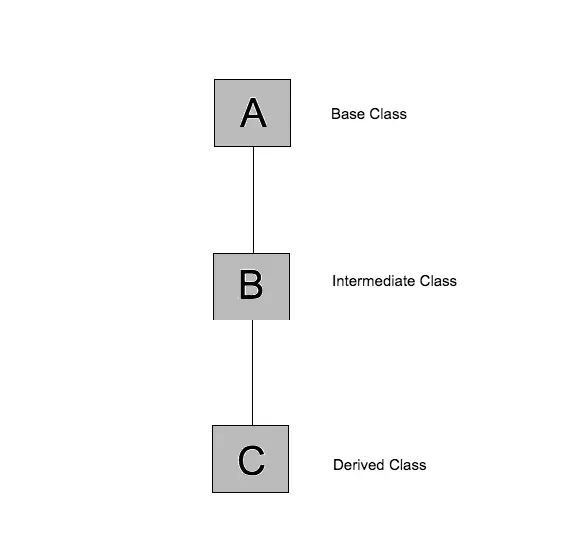
In multilevel inheritance three are more than one derived class i.e., a derived class is further derived.
class Parent {

    void add(int x, int y) {

        System.out.println("Result of addition is " + (x + y));
    }

}
from which a intermediate class acquires properties
class Intermediate extends Parent {

    void sub(int x, int y) {

        System.out.println("Result of substraction is " + (x - y));
    }

}
now we can again acquire the properties of intermediate class
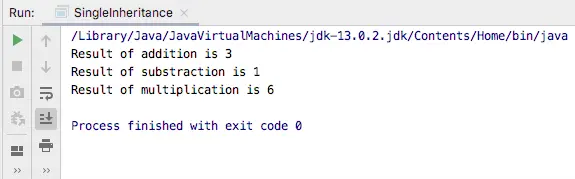
class MultilevelInheritance extends Intermediate {

    public static void main(String args[]) {

        MultilevelInheritance multilevelInheritance = new MultilevelInheritance();
        multilevelInheritance.add(1, 2);
        multilevelInheritance.sub(2, 1);
        multilevelInheritance.multiply(2, 3);

    }

    void multiply(int x, int y) {

        System.out.println("Result of multiplication is " + (x * y));
    }
}
Hierarchical Inheritance:
In hierarchical inheritance we can derive more classes from a single base class.
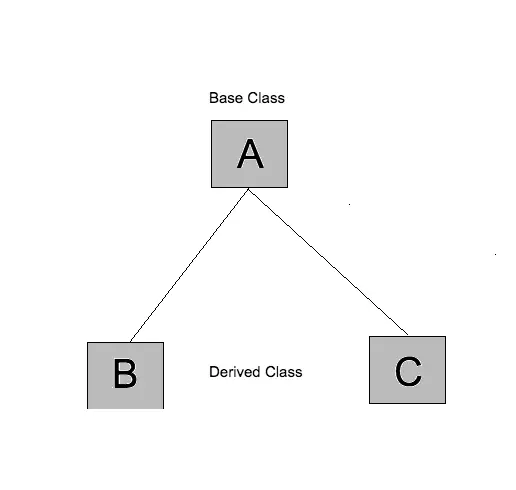
Create a base class
class ID {

    String id() {

        return "";
    }

}
inherit in from multiple classes as follow
Consider a student class having id
class Student extends ID {

    String id() {

        return "Student 01";
    }

}
Employee class with id
class Employee extends ID {

    String id() {

        return "Employee 01";
    }

}
now we can check how this inheritance works in real time
class HierarchialInheritance {

    public static void main(String args[]) {

        ID i = new Student();
        System.out.println(i.id());

        i = new Employee();
        System.out.println(i.id());

    }

}

If any query in java inheritance tutorial let us know in comment section below.
Do like and share this tutorial for more interesting java tutorials.